Curtain Finials: The Overlooked Detail That's Full of Surprises
If you think a curtain finial is just a fancy plug at the end of a rod, you're seriously underestimating it. In the world of interior design, it's the classic "never think about it until it's missing" component.
Let's take a closer look at this little "ornament" perched at both ends of your curtain rod—it has a much bigger story than you'd expect.
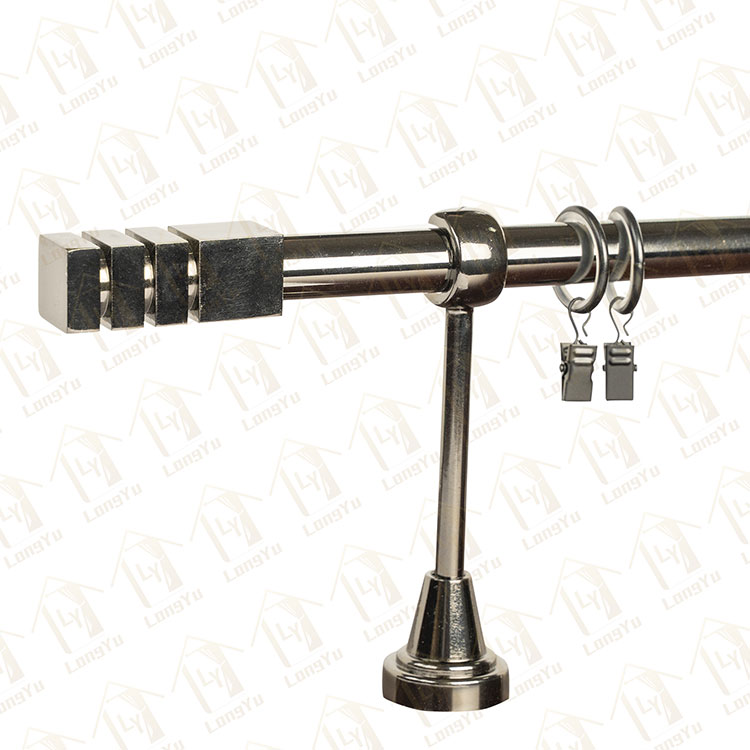
It's Not Just About Looks
Many people assume finials exist solely to look pretty, but their primary job is surprisingly down-to-earth: keeping your curtains from sliding off.
Think about it—you pull your curtains open and shut every day. If the rod ends were open, the rings or fabric tabs would eventually slip right off during all that back-and-forth motion. The finial acts like a diligent security guard, holding the line at both ends and ensuring your curtains stay exactly where they belong. Also, most curtain rods are hollow, and without a cap on the end, they'd make cozy little condos for spiders and bugs. Not exactly the vibe you're going for.
A History That Started on Rooftops
The word "finial" has roots that go way beyond window treatments. It's a true architectural veteran.
As early as the 8th century, finials appeared on pagodas and buildings across Asia, often designed to resemble lotus buds. Later, Gothic architecture in Europe really ran with the concept, placing stone-carved dragons or mythical beasts at the highest points of roofs and doorways—those were finials too.
So how did they make their way down into our homes? Here's a fun piece of trivia: early builders used heavy stone finials on rooftops partly to weigh down roof tiles and keep them from blowing off in strong winds. Craftsmen soon realized that since these pieces sat in such prominent positions, they might as well make them beautiful. That's how the elaborate carvings came about. Eventually, the concept of a "crowning ornament" migrated to bedposts, lampposts, and finally, curtain rods. So the little sphere you just twisted onto your curtain rod? Its ancestors were probably catching gusts of wind on top of a medieval cathedral.
The Victorian Era's "Aesthetics Arms Race"
If you think today's finial designs are diverse, the Victorians would beg to differ. That period was practically the golden age—or perhaps the "arms race"—of finial design.
Victorians had an obsession with ornamentation. They mixed and matched every historical style they could get their hands on—Gothic, Renaissance, Classical—and threw them all into one glorious mashup. The result? Curtain finials shaped like fleur-de-lis symbols of royalty, sharp spear points for a touch of drama, and even intricate openwork carvings. Back then, if your curtain rod ended in a plain, bare sphere, your neighbors would probably whisper that your home lacked… refinement.
A Fresh Finial Can Transform a Room
Today's finials come in a dizzying array of materials and shapes. You've got minimalist brass spheres, vintage crystal petals, industrial geometric forms, and everything in between.
If you want to refresh a room without a full-blown renovation, swapping out your finials is a surprisingly cost-effective move. For instance, replacing sharp metallic arrowhead finials with warm wooden spheres can instantly soften the entire feel of a space. As one designer put it, finials are like the "jewelry" for your curtains—they can make the whole window pop with just a small change.
One Practical Tip
Most finials are screwed on. If you ever try to remove one and it won't budge, don't yank it—try twisting it instead. And if twisting doesn't work, don't blame your grip strength. Look underneath the finial—there's probably a tiny set screw hiding there. Just grab a hex wrench, loosen it up, and you're good to go.
So next time you glance at your curtain rod, give that little ornament on the end a second look. This humble sentinel perched up high is both the guardian that keeps your curtains from falling and an aesthetic symbol carrying over a thousand years of architectural history.